Launching a new brand involves more moving pieces than most new business owners expect. Between naming, design, a website, and social media, it's easy to get the fun parts done and forget the operational details that make a launch feel polished instead of rushed.
This checklist walks through the process in phases, from early strategy work to the first month after you go live, so nothing important slips through the cracks.
Define Your Audience
Before any design work starts, get specific about who you're serving. A daycare targeting working parents in a specific neighborhood needs different messaging than one positioned as a premium early-education program. A landscaper focused on residential lawn maintenance will attract different customers than one chasing commercial contracts.
- Who is your ideal customer, and what problem are they trying to solve?
- Where do they spend time online, and how do they typically choose a business like yours?
- What objections or hesitations do they usually have before buying?
Clarify Your Positioning
Positioning is the answer to "why choose you instead of the business down the street." A boutique might position itself around curated, hard-to-find pieces. A coach might position around a specific transformation or niche. Write this down in a sentence or two before you touch a logo file, because it should guide every design and messaging decision that follows.
Review Your Business Name
If your name isn't finalized, check that it's easy to say, spell, and search for. Look at how it reads as a domain, a social handle, and on a sign. This is also the point to have a qualified attorney or trademark professional review the name for potential conflicts. A checklist can help you organize the creative process, but it isn't a substitute for proper legal or trademark research.
Write Your Brand Promise
Your brand promise is the commitment you're making to every customer, whether that's a barbershop promising a consistent, no-rush experience or a restaurant promising fresh, made-to-order meals. This promise should be something you can actually deliver on daily, not just an aspirational tagline.
Build Core Messaging
Draft the language you'll reuse across your website, social bios, and signage: a short tagline, a one-paragraph "about" description, and a few key phrases that describe what you do and who you help. Getting this consistent early saves you from rewriting copy in five different places later. Our guide on how to create a brand voice goes deeper into keeping tone consistent across channels.
Logo and Visual Identity
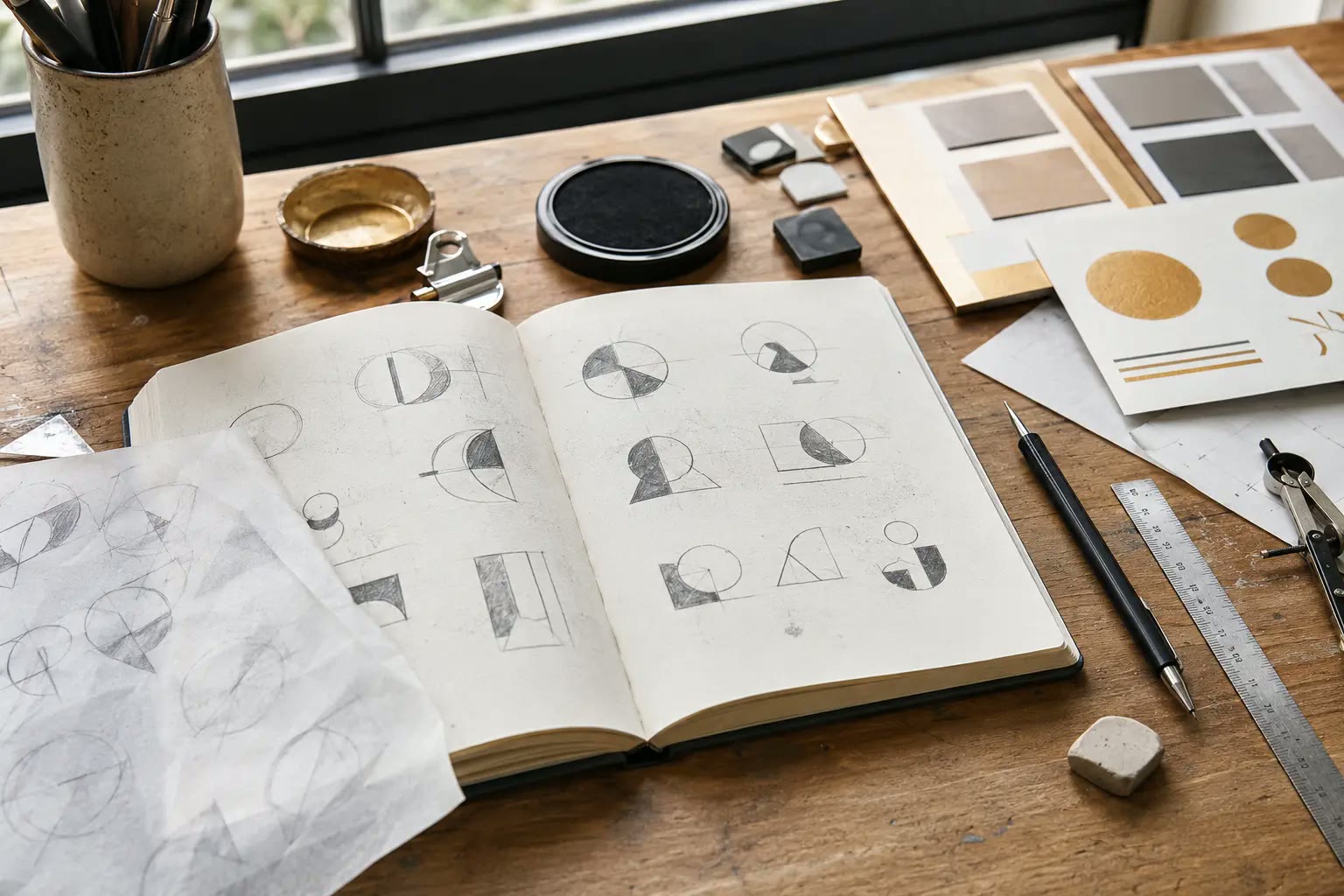
Your logo, color palette, and fonts should reflect the positioning you defined earlier. For guidance on what actually makes a logo effective, see what makes a good business logo. Beyond the logo itself, make sure you have:
- Logo files in formats suited for web, print, and social profile images
- A defined color palette with hex codes
- Primary and secondary fonts
- Simple templates for social graphics, so posts look cohesive from day one
Create Brand Guidelines
Even a one-page document that lists your colors, fonts, logo usage rules, and tone of voice will save you from inconsistency later, especially once you bring on employees, contractors, or a marketing partner. This is worth doing before launch, not after things start to drift.
Secure Your Domain and Professional Email
Register a domain that matches your business name as closely as possible, and set up professional email addresses using that domain instead of a generic personal account. This small detail affects how trustworthy your business looks in a customer's inbox.
Build Your Website
At minimum, your website needs a clear description of what you offer, your service area or hours, a way to contact or book, and mobile-friendly design. If you sell products or take appointments online, make sure those systems are tested end to end before launch, not during it.
Claim Your Social Handles
Secure consistent usernames across the platforms your audience actually uses. A consistent handle across Instagram, Facebook, and other platforms makes your business easier to find and looks more established, even on day one.
Plan Photography and Video
Generic stock photos rarely build trust the way real images of your space, product, or team do. Whether it's a coach filming a short introduction video or a restaurant photographing signature dishes, plan a photo and video shoot ahead of launch so you have real content ready to publish. Browse our portfolio for examples of the kind of imagery that helps a new brand feel established from the start.
Prepare Launch Content
Draft a batch of social posts, an announcement email if you have a list, and any launch-day graphics before the date arrives. Trying to create content the same day you're supposed to be celebrating a launch adds unnecessary stress.
Set Up Your Google Business Profile
If your business serves customers locally, whether a landscaper, daycare, or barbershop, a complete and accurate Google Business Profile is one of the most important things you can set up before launch. Add your hours, service area, photos, and a description that matches your website's messaging.
Set Up a Contact and Inquiry Workflow
Decide who responds to messages, calls, and form submissions, and how quickly. A new brand's first impression often comes down to how it handles that very first inquiry, so make sure there isn't a gap where messages go unanswered for days.
Install Analytics
Before you launch, add basic website analytics and, if relevant, tracking for form submissions or bookings. Without this in place from day one, you'll have no way to look back and understand what worked in those early weeks.
Run a Soft Launch
Consider a quiet soft launch, sharing the news with friends, family, existing contacts, or a small email list before the official public push. This gives you a chance to catch broken links, confusing copy, or booking issues while the stakes are still low.
Execute the Official Launch
Once the soft launch feedback has been addressed, move to your public announcement across social media, email, and any local channels relevant to your business, like a community group or local directory. Keep the messaging consistent with the brand promise and positioning you defined earlier.
Manage the First 30 Days
The weeks right after launch are for listening as much as promoting. Monitor reviews, respond quickly to inquiries, and pay attention to which messages or offers get the most engagement. Small adjustments made early are much easier than trying to fix a poor first impression months later.
The Complete Launch Checklist
- Audience defined and documented
- Positioning statement written
- Business name reviewed, with legal or trademark research completed by a qualified professional
- Brand promise written and realistic
- Core messaging drafted and consistent
- Logo and visual identity finalized
- Brand guidelines documented
- Domain registered and professional email set up
- Website built, tested, and mobile-friendly
- Social handles claimed and profiles completed
- Photography and video content ready
- Launch content drafted in advance
- Google Business Profile completed, if applicable
- Contact and inquiry workflow assigned
- Analytics installed and tested
- Soft launch completed and feedback addressed
- Official launch executed across channels
- First 30 days actively monitored and adjusted
Key takeaways:
- Strategy work, like audience and positioning, should come before any design decisions.
- A qualified attorney or trademark professional, not a checklist, should confirm your business name is clear to use.
- Consistent messaging, visuals, and handles across every channel make a new brand feel established immediately.
- A soft launch helps you catch problems before your official public announcement.
- The first 30 days are about monitoring and adjusting, not just promoting.
Frequently Asked Questions
How far in advance should I start planning a brand launch?
Most small businesses benefit from starting eight to twelve weeks ahead, which allows time for design, website development, content creation, and a soft launch without rushing.
Do I need a professional designer for my logo and identity?
It isn't strictly required, but a professionally developed identity tends to look more consistent and versatile across the many places it needs to appear, from signage to social profiles.
What's the biggest mistake new brands make at launch?
Launching without a plan for handling inquiries. Generating interest and then responding slowly or inconsistently can undo the goodwill a good launch creates.
If you'd like help thinking through positioning, identity, or launch content for your new brand, our team offers a brand-building consultation to help you map out the details before you go live. You can also explore our full range of services to see how we support brands from strategy through launch.