
A lot of small business owners think branding means a logo and maybe a color palette. In reality, your brand is everything people experience when they interact with your business — from your website to how your team answers the phone. Building a strong brand takes intention, but it doesn't require a massive budget or a big agency.
This guide walks through what a brand actually includes and gives you a practical, step-by-step process for building one that holds up over time.
What a Brand Actually Includes
Your brand is bigger than your logo. It's the sum of every impression your business leaves. That includes:
- Visual identity — logo, colors, fonts, photography style
- Voice and messaging — how you sound in writing and conversation
- Positioning — where you fit in the market compared to competitors
- Customer experience — how it feels to buy from you or work with you
- Consistency — whether all of the above feels like the same business everywhere it shows up
When these pieces work together, customers recognize you faster and trust you sooner. When they're mismatched, people notice — even if they can't say exactly why something feels off.
Start With Your Audience
You can't build a brand that resonates if you don't know who it's for. Before touching colors or logos, get specific about:
- Who your ideal customer is (not "everyone")
- What problem they're trying to solve
- What they care about when choosing a business like yours
- Where they spend time online and how they search for you
A brand built for a broad, undefined audience tends to feel generic. A brand built with a specific person in mind tends to feel like it "gets" the customer — which is exactly what builds trust.
Define Your Positioning
Positioning is how you're different from the other options your customer could choose. Ask yourself:
- What do we do better or differently than competitors?
- What would customers miss if we disappeared?
- Are we the premium option, the fast option, the local option, the specialist?
You don't need to be everything to everyone. Clear positioning makes marketing decisions easier because you know what to emphasize and what to leave out.
Write a Brand Promise
A brand promise is a simple internal statement of what customers can always count on from you. It's not a slogan — it's a compass for decision-making. For example, a promise might be "we respond within one business day" or "every project gets a dedicated point of contact." Whatever it is, it should be something you can consistently deliver.
Build a Consistent Visual Identity
Once you know your audience and positioning, visuals become much easier to design because they have a purpose. A solid visual identity typically includes:
- A primary logo and simplified versions for small spaces (favicons, social icons)
- A color palette with 2-4 core colors
- One or two font families for headings and body text
- A consistent photography or graphic style
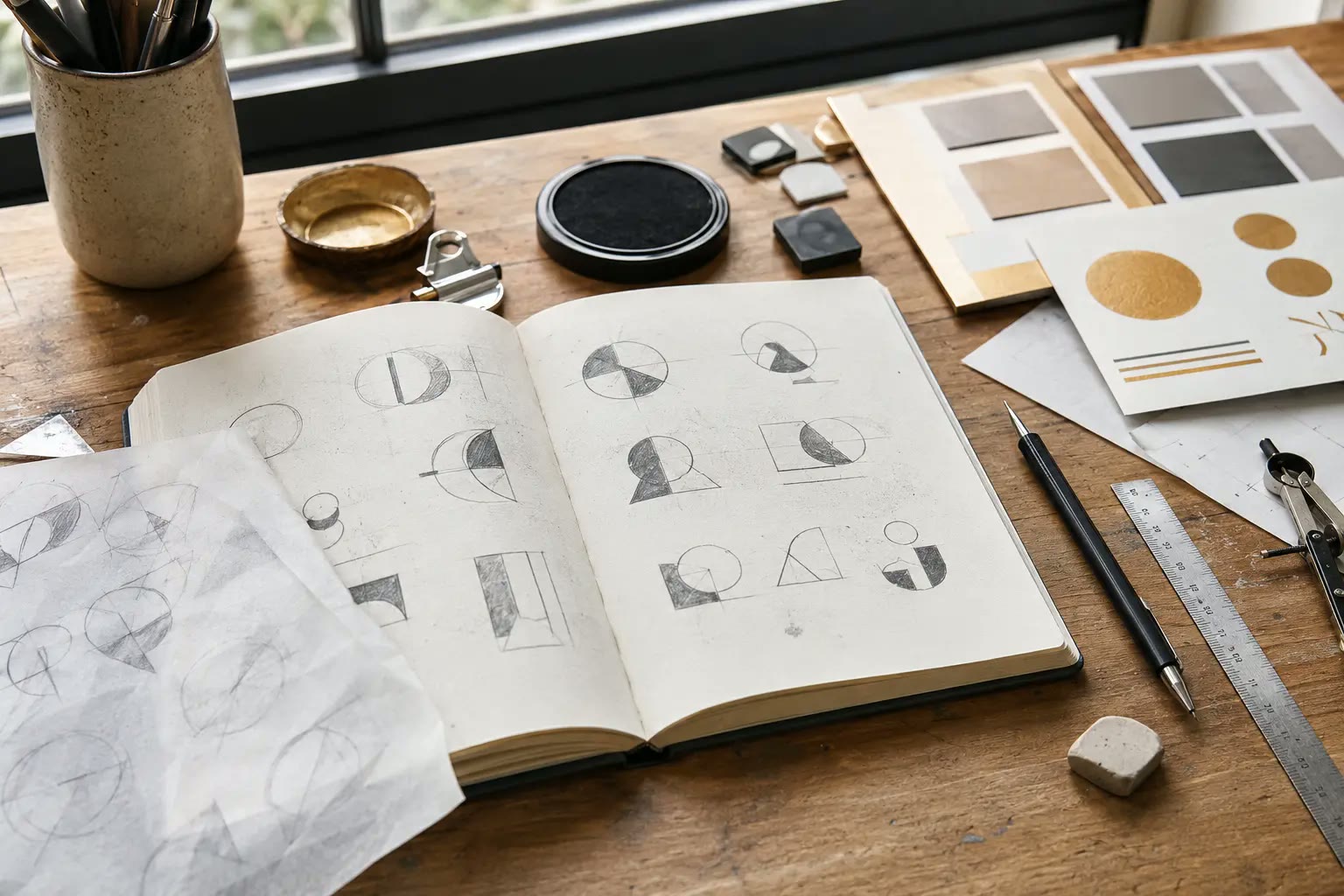
If you're still working out what a strong mark looks like for your business, it helps to review examples of effective logo design before finalizing anything.
Develop Your Voice and Messaging
Voice is how your brand sounds in writing — on your website, in emails, in captions. Is it formal or casual? Playful or straightforward? Whatever you choose, write it down so anyone creating content for your business sounds consistent. Messaging includes your tagline, your "about" story, and the key phrases you use to describe what you do.
Design the Customer Experience
Branding isn't just visual — it's felt. Consider:
- How quickly you respond to inquiries
- What it's like to check out on your website
- How your packaging or paperwork looks
- How your team talks to customers on the phone or in person
A polished logo doesn't make up for a confusing checkout process or a slow response time. Experience is part of the brand too.
Keep Everything Consistent
Consistency is what turns a nice-looking brand into a recognizable one. Use the same logo files, colors, and tone everywhere — your website, social profiles, invoices, signage, and packaging. If different people manage different channels, a simple brand guide keeps everyone aligned. This is also where ongoing social media management can help, since it keeps your voice and visuals consistent post after post, even when you're busy running the business.
A Step-by-Step Branding Process
- Research: Study your audience and competitors.
- Define: Write your positioning and brand promise.
- Design: Build your logo, colors, and fonts.
- Write: Develop your voice and core messaging.
- Apply: Roll the brand out across your website, social profiles, and materials.
- Maintain: Check consistency regularly and update as your business grows.
Common Branding Mistakes to Avoid
- Designing a logo before defining your audience or positioning
- Changing your voice or visuals constantly, making the brand hard to recognize
- Copying a competitor's look instead of finding your own angle
- Ignoring the customer experience side of branding
- Treating branding as a one-time project instead of something to maintain
Key takeaways:
- A brand includes your visuals, voice, positioning, and customer experience — not just a logo
- Know your audience and positioning before designing anything visual
- Write down your voice and visual guidelines so everyone stays consistent
- Treat branding as ongoing maintenance, not a one-time project
Brand-Building Checklist
- Defined our target audience clearly
- Identified what makes us different from competitors
- Written a simple brand promise
- Designed a logo and chosen colors and fonts
- Documented our voice and key messaging
- Reviewed the customer experience end to end
- Applied the brand consistently across all channels
Bringing It All Together
Building a strong brand is less about finding the perfect logo and more about making sure every part of your business tells the same story. Start with your audience, define what makes you different, and keep everything consistent as you grow. If you want a second set of eyes on your strategy or visuals, our branding services or a quick brand consultation can help you get unstuck. You can also browse our portfolio for examples of brands we've helped bring to life.
FAQs
How much does it cost to build a small business brand?
Costs vary widely depending on how much strategy, design, and content work is involved. It's best to discuss your specific needs during a consultation so you get an accurate scope.
Do I need a brand strategy before designing a logo?
Yes, ideally. A logo designed without knowing your audience or positioning often ends up generic or mismatched with how customers actually see your business.
How often should I update my brand?
Most small businesses don't need frequent overhauls. Small refreshes every few years, or when your business changes significantly, are usually enough.
Can I build a brand without a designer?
You can start the strategy work yourself, but professional design help ensures your visuals look polished and work well across different platforms and sizes.
What's the difference between branding and marketing?
Branding is who you are and how you're perceived. Marketing is how you communicate that to attract customers. Strong marketing works best when it's built on a clear brand.